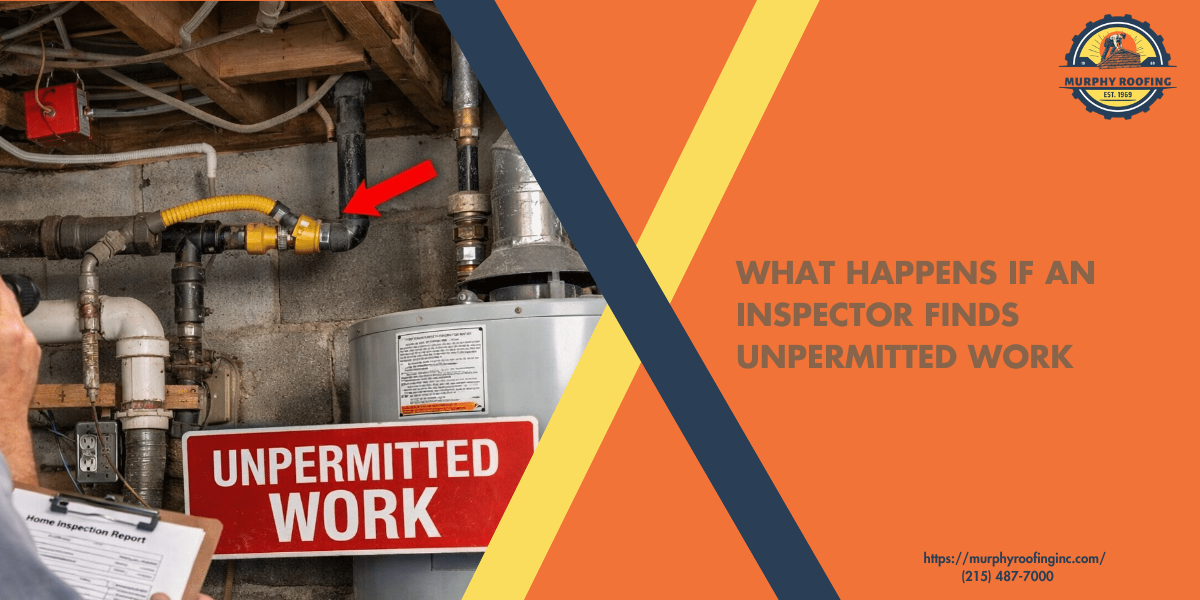
The pressure can quickly escalate when building violations are discovered during an unannounced city inspection or when the home is inspected as part of a regular building assessment. When an inspector discovers a change of structure without permission or electrical wiring that is not approved, with roofing that is not permitted, the law and finances of the property owner will be in danger. From a construction standpoint, your building changes will be compliant with the municipal requirements from the start when you partner with licensed roofers. From Murphy Roofing, protecting your investment from the possibility of costly stop-work orders and municipal fines.
What Is Unpermitted Work?
Unpermitted work is defined as any structural alteration, major repair, or construction work carried out that did not receive the necessary municipal permits or building inspection approval.
Local building codes have been established to ensure safety, structural soundness, and energy efficiency. Small changes to the appearance of the building, such as painting or new cabinet finishes, will not need to be approved by the City; large structural changes will need to be approved by the City.
Commonly Unpermitted Projects:
- Roof replacements & major structural re-roofing
- Electrical panel upgrades & new wiring runs
- Plumbing line additions or reconfigurations
- Load-bearing wall removal
- Deck construction & room additions
The Consequences Of An Inspector Discovering Unpermitted Work.
If a local building inspector or code enforcement official discovers work that was done without proper permits, he or she will begin a formal enforcement process:
Unpermitted Work Discovery Sequence:
- Discovery of Violation
- Stop-Work Order
- Formal Property Audit
- Remediation & Penalty Settlement
1. The Issuance Of A Stop-Work Order.
As soon as construction is in progress, the inspector places a stop-work order on the premises. Work on all projects must be suspended until the city has approved the plans and granted valid permits. Failure to continue work under a stop-work order will result in increasing fines and possible criminal citations.
2. The goals of the retroactive permitting and inspection program are to:
To get a permit for a project that is already finished, property owners need to apply for a retroactive permit (also known as an as-built permit). The unpermitted buildings are inspected by the local building department. This process often involves opening up completed walls or stripping away walls or other installed material to allow the inspector to see the structural elements behind it, such as electrical wiring or the roof underlayment.
3. Substantial Financial Fines
City building departments have some harsh financial consequences for unpermitted construction. Retroactive permit fees can be up to double or triple the regular permitting fees, and daily fines for non-compliance until the problem is corrected.
4. To Be Demolished Or Demolished And Exposed.
If the work completed is not up to current building codes and can’t be altered to meet the code, the inspector will call for the entire removal. May need to pay to remove the illegal improvement and restore the structure to its original condition.
The Impact Of Unpermitted Work On Home Sales And Insurance:
There are significant challenges associated with unpermitted work during real estate transactions and insurance claims:
| Area Impacted | Primary Risk / Consequence | Financial & Legal Outcome |
|---|---|---|
| Home Sales | Failed buyer inspections & title issues | Buyers demand steep price concessions or walk away entirely. |
| Mortgage Approval | Lenders refuse to fund unpermitted square footage. | Appraisals flag unpermitted additions, blocking buyer loan approvals. |
| Property Insurance | Claim denials for unpermitted structures | Insurance policies typically exclude damage caused by uncertified work. |
| Property Value | Reduced appraisal valuation | Unpermitted square footage cannot be counted in official property size. |
How To Fix Unpermitted Work
If you find unauthorized changes to your home or business, you can get your property 100% legal with these steps:
- Use qualified professionals to audit work to local code requirements that were not authorized.
- Develop engineering/construction plans for municipal review for retrofit projects (in collaboration with a licensed contractor).
- Uncover “Hidden” Systems: Be ready to take down drywall, shingles, or siding to allow city inspectors to inspect internal structural connections.
- Pay Administrative Penalties and Permit Application Fees from the Municipality.
- Make Necessary Repairs: Make any necessary repairs to code violations found during the retro look before final sign-off.
Why Hiring Licensed Roofers Matters In Philadelphia, Pa
Depending on the country, there are local building codes that must be adhered to in roofing projects to ensure they can withstand severe weather, stop leaking, and meet structural load capacities. When hiring specialized services such as Roof Installation in Philadelphia, PA or Roof Repair in Philadelphia, PA, you can be sure that your project will go from start to finish without any hassles.
Partnering With Licensed Roofers In Philadelphia, Pa., Ensures Crucial Protections:
- Guaranteed code compliance: All city paperwork, permit filings, and required site inspections are in the hands of the professionals.
- Insurance and warranty protection: When licensed work is done, the manufacturer’s warranties are maintained, and complete insurance is provided should the storm damage the house.
- Safety & Structural Integrity: Certified crews provide correct installation of underlayment, flashing, and proper ventilation to current regional building codes.
Frequently Asked Questions
Can a buyer obtain permits for past owner unpermitted work?
Yes. Outstanding code violations are the responsibility of the current property owner and not the person who did the work. The new owners will be able to apply for retroactive permits and make the necessary changes to make the property compliant.
Does Homeowners Insurance Cover Unpermitted Work?
In most cases, no. Insurance policies have clauses that provide no coverage for loss or damage caused by building work that wasn’t authorized by the insurance company or was illegal, or building that was not carried out in a compliant manner.
How Far Back Can a Building Inspector Look for Building Permits?
There is generally no time limit for unauthorized building activity. Code enforcement officers may mark buildings that are not properly built and cite the builders, no matter when the structures were originally built.
What Is The Difference Between A Building Violation And Unpermitted Work?
Unpermitted work is defined as work done on projects that are not permitted or approved by the city. Unpermitted work, structural decay, safety issues, and failing to keep structures to code are all examples of a building violation; this is a more general term.
Are Retroactive Permits Available, And If So, How Much Do They Cost?
Retroactive permit fees are determined on a municipality-by-municipality basis, but generally the cost of the permit is two to four times the regular permit fee, plus inspection fees.